Pages

Monday, June 16, 2025

Caregiver Action Network

What a treasure trove of resources for caregivers! Whether you're just beginning to care for a loved one, or have been doing it a while, this website would offer you insights: www.caregiveraction.org 

Just some of the resource headings on this website are:

Toolbox. Search by disease/condition, resource type, or caregiver role to find checklists, guides, and helpful tools for every stage of caregiving.

Financial & Legal Tools. From understanding how to get paid as a family caregiver to accessing government benefits and assistance programs, find practical guidance and downloadable checklists to support your caregiving journey.

Support. Agencies and organizations, Community, Respite care, Peer-to-Peer support, Emotional support, Clinical trial support 

This Caregiver Action Network site even has a live chat box to help you navigate.

I encourage you to check it out. 

Be Sweet to Your Feet

 Caregiver.com offers NIH Tips for Happy Feet here

Tuesday, April 29, 2025

The Aging and Alone Care Needs

Announcing a timely new resource! In this week's Caregiver.com newsletter, Carol Marak writes that she has launched a Facebook group called Elder Orphans, people who are solo aging. Elderly people face many struggles as their abilities decline, and having no one to help them raises their frustrations and risks. In the new Facebook group, members can share resources and ideas.

IMHO, this is an idea whose time has come. I hope it snowballs to effect great changes in how well we age.

To read Carol Marak's article, The Aging and Alone Care Needs and Preferences, click here

Monday, January 20, 2025

Hypothermia and Older Adults

Caregiver.com article, Hypothermia and Older Adults, is timely. (Chicago windchill today is -10 degrees!) When we visited Mom and Dad, we knew to dress in layers. We might need that wool sweater traveling to their house in winter, but once inside, we would shed layers or perspire uncomfortably. This article explains why Mom and Dad set the thermostat so high. And why every armchair had a folded afghan at the ready.


Since caregivers sometimes also qualify as older adults, I encourage you to read here about reasons seniors need to pay attention to temperatures and hypothermia symptoms to look for. The Hypothermia and Older Adults article includes tips for financial help heating a home and additional resources.

Monday, January 6, 2025

Caring Bridge resource makes your life easier

Caring Bridge is what it says it is, a bridge from you (or your loved one) to people who care about your situation. Via the Internet site CaringBridge.org, you can easily communicate updates to people whom you choose to tell.


When you want to share a diagnostic test result, it's easy to let people you've designated to receive Caring Bridge updates know the news. Yay, Dad didn't have a stroke! When the oncologist decides on your mother's twelve radiation treatments to begin September 1 and end November 30, you can inform those closest to you of this decision. When you see that Mom feels nauseated for about two days after each Wednesday treatment, you can simply send a Caring Bridge note to please not phone on Thursdays and Fridays.


Recently, I learned that Caring Bridge also offers great advice on building and maintaining a strong support network. You can read it here.

Friday, January 3, 2025

When Caregiving is Not Enough - Finding Good Homecare

 In her article, "When Caregiving Is Not Enough ~ Finding Good Homecare," in this week's issue of Caregiver.com's newsletter, , offers a meaty list of issues to consider when seeking in-home care for your loved one.


Her tips, which you can find here, are very wise. After my family's frustrations and hard-earned lessons with several home care agencies, I cringe when I hear a caregiver say, "Oh, we're just going to hire Sally because our neighbor liked her." You need to ask Ms. Pavela's great questions about communications, supervision, emergencies, insurance, and so forth. Finding good homecare should lighten your load, so vet people and agencies with problem prevention in mind.

Wednesday, January 1, 2025

Cookies!

 She sat with afternoon sunlight rendering her royal blue cashmere cardigan and blue/apple green silk scarf into sapphires and emeralds. Or maybe her glow came from Day 3 of her only son's visit. Her eyes shone with joy and attempted attention to her son's fingers and lips as he tweaked her computer files, shortcuts, and apps to make her 96th year easier and cybersafer.

As grateful as I was for my brother's tech help and as hard as I concentrated on remembering all this new information so that I could help Mom after my brother went home, I zoned out. Had to leave. My techno-weenie brain was full.

On my drive home, a conversation replayed in my head. Mom had looked at me brightly and shared that when I had e-mailed that I wanted to bake cookies with her, she had immediately sent her caregiver to the store to buy all the ingredients. She was so excited. I was dumbfounded.

I wondered if someone else had expressed a desire to bake Christmas cookies with Mom. Who was the e-mail from? Me? I didn't remember saying that I wanted to bake cookies. Can't even imagine it; I don't have the patience required to bake cookies. Plus, it's not part of my childhood history with Mom.  Back scratches, yes. Head rubs, yes. Cookie baking, no.

Finally, in the car on my way home, it clicked. I had copied Mom on an e-mail I had sent to my brother to ask him if while he was in town, would he show me how to clear cookies from Mom's computer.

Awww ... Mom's eagerness to bake Christmas cookies with me touched my heart. Her confusion concerns me, yes, but mostly, I want to bake cookies with my mom. 


Tuesday, July 30, 2024

Just admit it ~ You're a caregiver!

So many articles encourage caregivers to take care of themselves in the midst of caring for a loved one. So many people these days are tending to a less capable person's needs. Great advice for just about any obstacle they encounter is readily available, especially with resources like Caregiver.com, a website that is searchable by subject.

BUT, what I encounter most when I suggest Caregiver.com to friends is, "Oh, I'm not a caregiver." Is a common perception that you're not a caregiver unless ... unless what? You've moved a parent or older sibling into your home? My friends drive their loved one everywhere, get calls to come over when the person can't get out of bed, manage all prescriptions, make and take meals, research and purchase practical needs like special cushions or lift-chair recliners, follow the ambulance and curl up on a hard plastic chair in the ICU to try to get some shuteye. And my friends carry these responsibilities week in and week out for years.

My friends recognize their own burnout. How can they think they don't need caregiver resources or any respite for themselves? To them, I say, "Just admit it ~ You're a caregiver!" Please!

I like to post Caregiver.com articles in this blog, and I will today, too. An article by Barbara Hanson Dennis has some great, positive suggestions. You can read "Surviving Caregiving with Dignity, Love, and Kindness" here.

Thursday, May 9, 2024

Beware Caller ID Spoofing

 Caregiver.com's article "Caller ID Spoofing," gives advice that can't be repeated too often. Most of us who aren't super tech-savvy and don't operate with criminal intent naturally believe that our Caller ID tells the truth. If Caller ID says our bank is calling, then we expect to be talking with our bank when we answer the call. If Caller ID says Microsoft is calling, then we assume Microsoft is calling. Most seniors can't imagine it's possible to program a phone to lie.

You can read the Caregiver.com article here, for great reminders, such as the trick of verifying by independently researching the supposed caller's actual phone number and calling them. I might add that this wisdom applies to e-mails as well. I recently got an e-mail telling me my I-Pass account to pay tolls had little or no money left in it and I needed to replenish my account right away. Everything ~ the I-Pass logo and website URL ~ looked legit. But I left that e-mail and Googled I-Pass, where I found a banner warning of this very scam. Also, my account was nowhere near depleted.

Tuesday, January 30, 2024

Forty-Eight Mental Breaks for Caregivers

Wow, I really like this list in today's Caregiver.com newsletter. Forty-Eight Mental Breaks for Caregivers. I might add For Any Stressful Time of Life. And also, really let your mind and heart go to those places. For Number 17, the beach, for example, don't just think about a beach. Feel warm sand under your toes, cool foam sloshing over your toes, sunshine soothing your eyelids. Remember your giddy joy to find the tide line littered with starfish or a whole sand dollar or conch. Think about how fun it was to peer inside a fisherman's bucket and chat about the day's catch. Any sand castles in your memories? Dolphin sightings? Take a little time to revel in each mental break.

Number 7, taking a drive on a pretty road ... I'd almost forgotten the drive through Big Sur forty-plus years ago. I don't think often enough about the jaw-dropping colorama in the Adirondacks on a more recent drive. But if I sit with these memories for a bit, details will come to mind and refresh me.

I encourage you to check out all 48 here. Try a few, especially if your caregiving situation is such that you can't take nearly enough actual physical breaks. These mental break ideas are winners.


Monday, January 1, 2024

Legal Tips for the New Year

 "Legal Tips for the New Year" by Jonathan Chochor, JD, does contain helpful legal tips for caregivers, but more than that, the article tells a few ways you can be a more effective medical advocate.

Researching a physician's professional background for disciplinary actions is a tip I don't often see. A more common tip, keeping a log of symptoms, diagnoses, and medications is extremely important. Take the log to doctor visits.

I wish I had bought a notebook to dedicate for this purpose. Instead, I used note papers, which, I can testify, get lost easily. I might add that as medications add up, you'd be wise to jot each drug's possible side effects in your notebook and inquire of the doctor if you note new symptoms you suspect might be side effects. In my experience, doctors were pretty good at monitoring this themselves, but it doesn't hurt to ask. Ultimately, you need to make the best decision for your loved one, and that means understanding risks and benefits of the drugs.

To read Chochor's article in Caregiver.com, click on "Legal Tips for the New Year."

Sunday, December 31, 2023

Dementia & Driving

 Here's a comprehensive resource for you if your loved one is at any stage of dementia and is still driving.

Here is a link to Dementia & Driving, provided by Warner Law Offices.

This guide gives suggested ways to approach the dreaded taking-away-the-carkey conversation, ideas to give your loved one some level of transportation independence, and how to cope with the emotions of this change.

Friday, December 29, 2023

How to Keep Your Loved Ones Independent

Tena L. Scallan has some great suggestions for "How to Keep Your Loved Ones Independent" in Caregiver.com, the free newsletter for Today's Caregiver magazine. 

Two of her suggestions resonate most with me. One is understanding that changes in your loved one's physical abilities will most likely be accompanied by emotions. Whether it's a temporary setback, like post-surgery rehab, or permanent decline, your loved one may well exhibit symptoms of depression. None of us likes to face the new reality of lost independence and increased dependence. I would learn what you can about the grief process, because your loved one is experiencing a loss, and so are you as you newly set aside a part of your own life to care for someone's new need.

The other one of Scallan's suggestions that I feel compelled to stress is paying attention to your loved one's dietary habits. This can be challenging, especially if Dad's only pleasure these days is a chocolate frosted donut with his morning coffee. But I encourage you to find a reliable source of information about dietary needs in the elderly, or in whatever other people group your loved one falls in (for example, people with MS or Alzheimer's or diabetes). I might offer the Mayo Clinic or Cleveland Clinic as reliable sources of health info, but you can find others as well. Zero in on fiber and fluids, as Scallan mentions. And try to limit your gifts of sugary treats.

To read Tena Scallan's other practical tips for keeping your loved one independent, click here.

Friday, November 17, 2023

Ten Commandments for Caregiving

Mimi Pockross in this week's Caregiver.com newsletter nails it in her article, "Ten Commandments for Caregiving." Read it here.

As I read her ten commandments, I kept nodding. At some points I nodded out of exhaustion. Oh my goodness, caregiving takes so much out of a person! At other points I nodded out of agreement with the wisdom of her points. But bottom line: Decide up-front to spend the time doing what she recommends and you will save yourself a lot of exhaustion time. 

Commandment Number Five is Educate Yourself. Number Eight is Do Your Homework. So many resources exist now that did not exist when I began my caregiving journey. I am forever grateful that I read the books I did, because that knowledge was invaluable in arranging for what Mom and Dad needed. Homework time spent paid off. You'd be amazed (and distressed) to learn how many hospital personnel do not have disease-specific training. They are well-trained in keeping your loved one alive, but don't count on them to know specifics about how not to traumatize a person with Alzheimer's, for example. You WILL find yourself in the position of training them. So, be prepared.

Commandment Number Six, Learn Every Bureaucracy, also resonated with me. Invariably, you will need to know what hospital nurses can and can't do. Who supervises them, in case you need to speak with that person? Who is this hospital's patient ombudsman? And of course, since your mom's meds are managed by the nursing facility's nurse manager, you assume if you need to give a list of her medications to someone, you'd go through the nurse manager. Nope. Medical Records does that. I wasted three months barking up the wrong tree because I didn't know this. In addition, learn what constitutes elder abuse and how to report it. If you hire in-home help, know the supervisor!

All Ten Commandments for Caregiving in this article are worth a look. Thank you, Mimi Pockross!


Saturday, July 8, 2023

The Rear View Mirror


Driving Mom and Dad


In the rear view mirror I see

one side of Mom’s mouth droop when she talks,

as if half of her is just so tired.

At a rest stop, they change places.

In the rear view mirror I see

Dad’s hollow sockets stare straight,

as if he’s seen too much world go by.

Soon they will want to rest again,

And I will need to let them.


© 2006 Jane Hoppe

Thursday, April 13, 2023

How to Be a Healthcare Advocate for Yourself and Loved Ones

 Every Monday my newspaper features a column by Teri Dreher, who is a nurse, and a patient advocate and owner of a patient advocacy company. To help readers make the healthiest choices, she tackles everyday topics like questions to ask before agreeing to surgery, as well as awareness of hurtful behaviors. I find her columns very practical for caregivers, so I was delighted to learn that Dreher has written a book, How to Be a Healthcare Advocate for Yourself and Loved Ones, available on Amazon.

Here is the description on Amazon:

How to Be a Healthcare Advocate for Yourself and Loved Ones provides crucial, potentially lifesaving advice for those trying to navigate modern healthcare and secure the best medical treatment for themselves and the people around them. Author Teri Dreher, a nationally recognized professional patient advocate, draws on decades of experience as a critical care nurse to give readers an insider’s view of the healthcare landscape. What are the 10 dos and don’ts for getting more out of doctors’ appointments? What seven questions should you ask before any surgery? How many prescriptions are too many? What are the eight top habits of savvy healthcare consumers? Dreher answers these important questions and many, many more with practical answers to help readers and their loved ones live longer, healthier lives—while avoiding common pitfalls.
 
You can go to Teri Dreher's Amazon page here

Wednesday, November 16, 2022

An Unexpected Benefit of Caregiving

My favorite resource during this season of my life, Caregiver.com, yesterday published an article I wrote about practical health care tips I have gleaned from my parents' doctor visits.

You can read "An Unexpected Benefit of Caregiving" here.


Saturday, October 15, 2022

5 Ways to Help Loved Ones Deal With Grief

In her Caregiver.com article, Rebecca Rushing, BSN, RN, discusses ways a caregiver can deal with his or her own grief and help other grieving family members. I was especially interested in this topic because of my grief experience after my dad died. I had come alongside my mom for most of the ten years she cared for him after an Alzheimer's diagnosis. When he died, the rest of the family gathered around the grieving widow, left me and my husband standing alone to clean out Dad's belongings from his nursing home room, and then most of them pretty much didn't want to talk with me in subsequent months about missing Dad. I realized then everybody grieves differently. I would have benefited from Rushing's advice to get grief counseling for myself.

Another aspect I wish I'd learned back then is Rushing's Point 4: Help them become more independent. My dad had been Mr. Fixit around the house. Plus, simply being taller and stronger than Mom, he could do things like change light bulbs in ceiling fixtures. Even with an Alzheimer's-addled memory, he was still clever. Once, they needed a new toilet, so Mom and I drove to Home Depot, bought a toilet, and had store workers lift the toilet into my SUV. When we pulled into their driveway, Dad rushed out because he was hyper-anxious whenever Mom was gone; he knew he depended on her for everything. So the three of us stood behind the vehicle wondering how the heck we were now going to get this 80-pound monstrosity out of the car and into their garage. Dad suggested, "Let's roll the rolling garbage bin out here, slide the toilet onto the top of the bin, and wheel the bin into the garage. The plumber can take it from there." Brilliant! Ten-ish years later, after a divorce, I have to figure out practical home ownership stuff that my husband always did. If I'd realized recently widowed Mom had been in a similar boat, I could have helped her more.

Rebecca Rushing's article (here), "5 Ways to Help Loved Ones Deal With Grief," is grace-filled and practical. Grief is a really hard, painfully lonely thing. Bottom line is we each deal with it our own way, but Rushing offers some helpful tips.

Extending Independence with Dignity

Finally, a snazzy, jazzy way to get help if you fall! It's the Kanega Watch. 

To learn about its inspiration and inventor, Jean Anne Booth, read her interview with Gary Barg, Editor-in-Chief of Today's Caregiver magazine. (link here)

To learn more about this unique medical alert watch, Kanega Watch, go to the UnaliWear site.

Friday, September 9, 2022

Keep the Memories, Not the Stuff

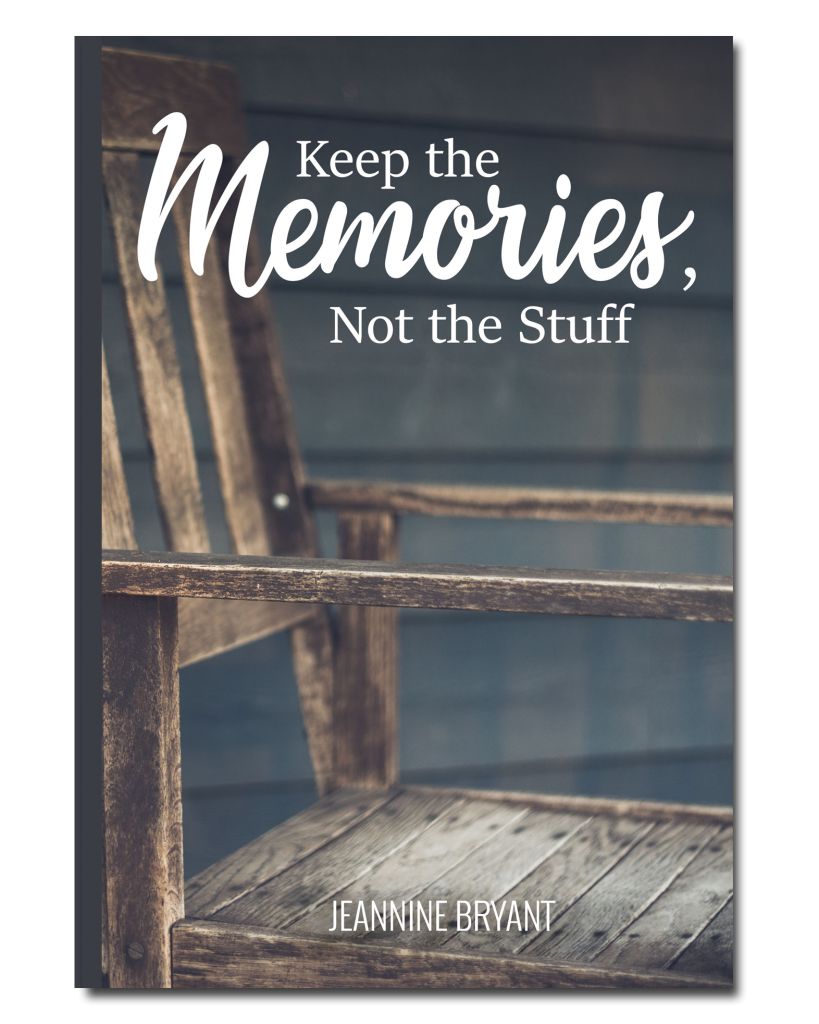
I need to read this book! Keep the Memories, Not the Stuff by Jeannine Bryant is a timely topic for me. One parent passed, one keeps moving into smaller spaces. And hey, Jane has a basement; let's give the stuff to her has been my family's mantra. And Jane, wanting to help and being a sentimental person who doesn't want to let go of her parents, takes their stuff and stacks it in her basement. Even buys new plastic bins for the stuff. But now I need to downsize. What to do with music cassette tapes my dad spent so much loving time recording, or every imaginable kind of hammered aluminum serving tray? (Apparently, hammered aluminum was a popular wedding gift in 1948.)
keep the memories

I learned of Jeannine Bryant's book at Caregiver.com. Here is the publisher's description:

We all will lose loved ones throughout our lives and dealing with the possessions they leave behind is no easy task. If you have trouble letting go of keepsake items that are attached to memories, this book will help you gain a new perspective on life, love, memories, and how none of it is tied to STUFF.

Reading this book can help you properly keep and treasure the best stuff, while letting go of the rest of the stuff. And finally, help you move onto the next stage of your life. Bryant shares thoughtful insights into the grieving process, our attachment to stuff, and the process of letting go. She also gives many practical tips and hands-on advice for letting go without the guilt and leads readers through an important discussion on what it really means to leave behind a legacy for your loved ones. (Hint: It has absolutely nothing to do with your stuff).

"The brutal reality is that people die, and their stuff must go somewhere.” So begins this honest, direct yet caring approach to our loved one’s memories and the stuff that is attached to them.

We all will lose loved ones throughout our lives and dealing with the possessions they leave behind is no easy task. If you have trouble letting go of keepsake items that are attached to memories, this book will help you gain a new perspective on life, love, memories, and how none of it is tied to STUFF.

Reading this book can help you properly keep and treasure the best stuff, while letting go of the rest of the stuff. And finally, help you move onto the next stage of your life. Bryant shares thoughtful insights into the grieving process, our attachment to stuff, and the process of letting go. She also gives many practical tips and hands-on advice for letting go without the guilt and leads readers through an important discussion on what it really means to leave behind a legacy for your loved ones. (Hint: It has absolutely nothing to do with your stuff).